October 24, 2026. Visual Arts Collective, Garden City, Idaho. Big band, small dark room.
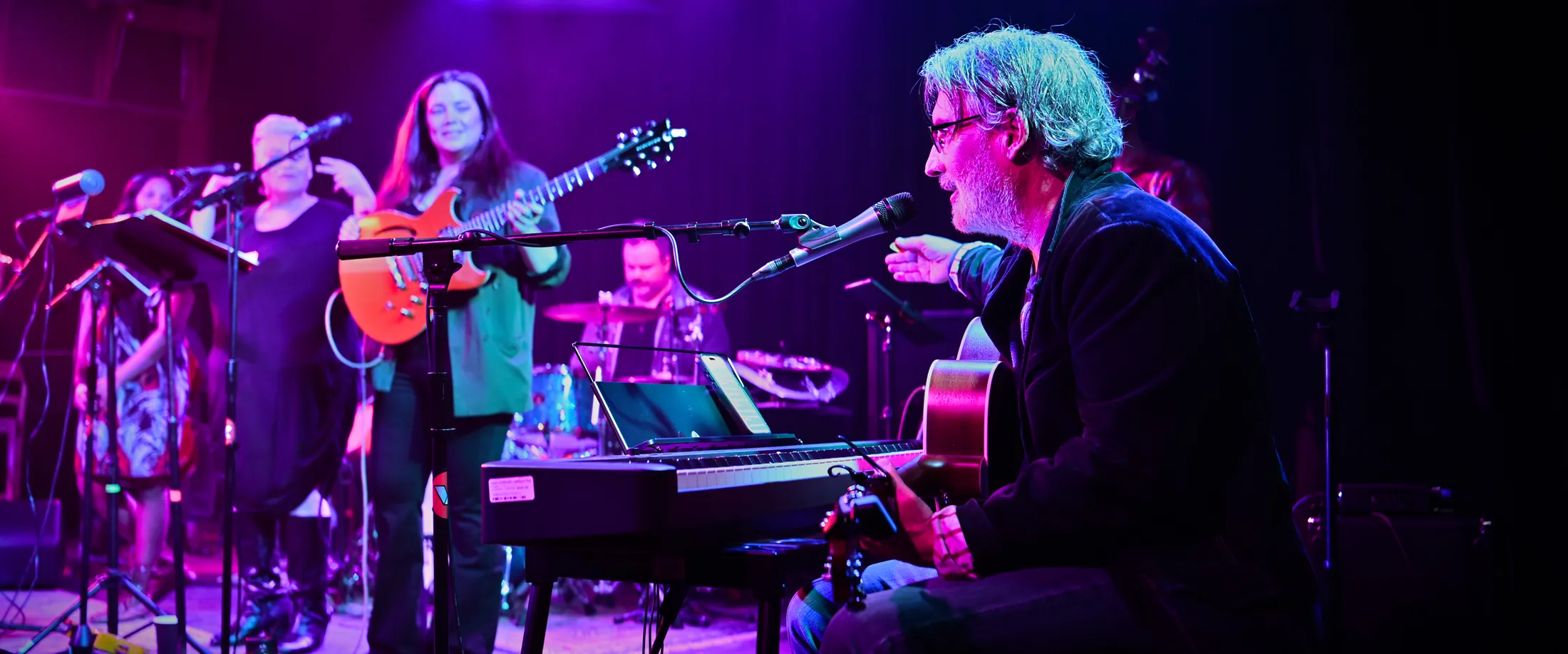
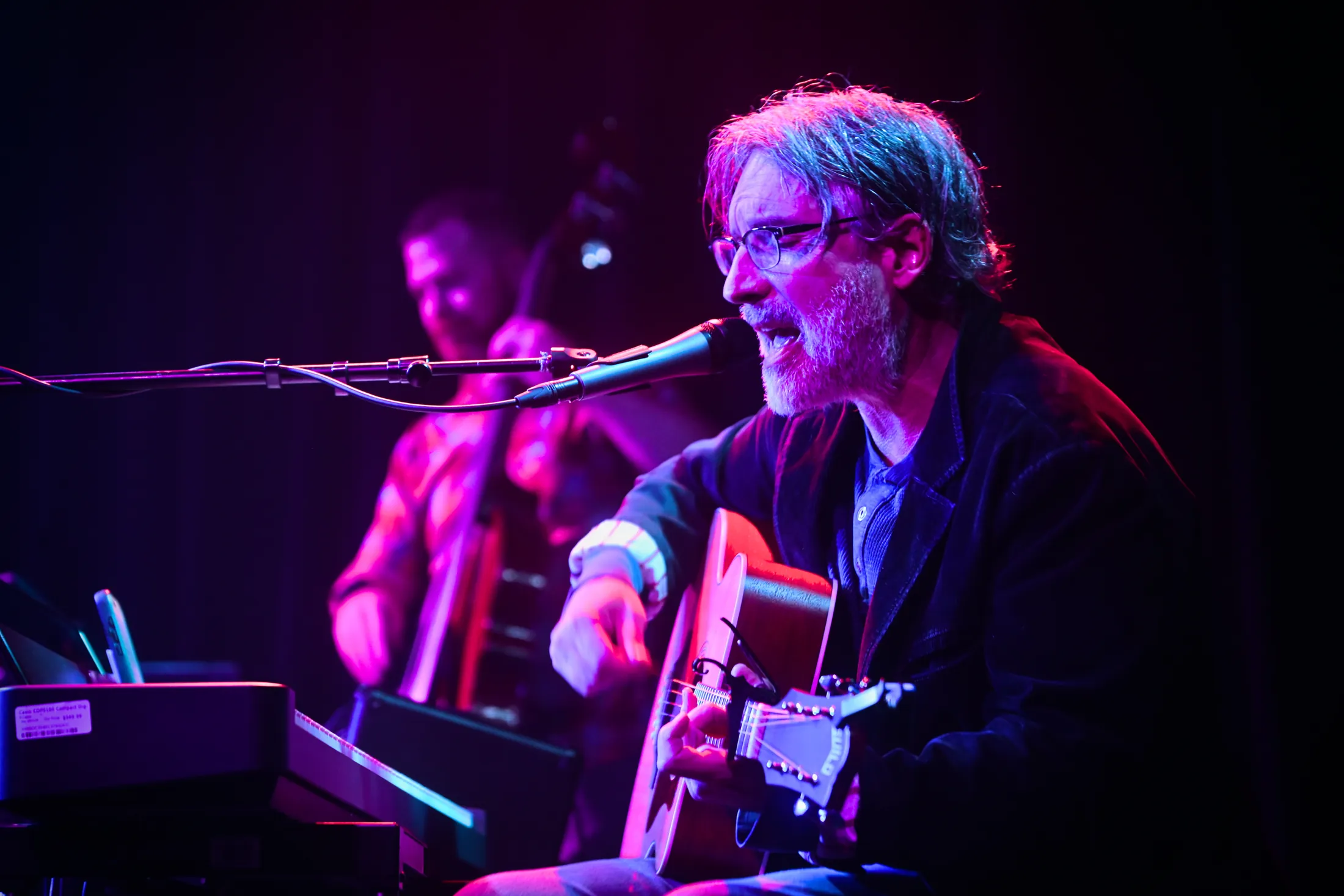
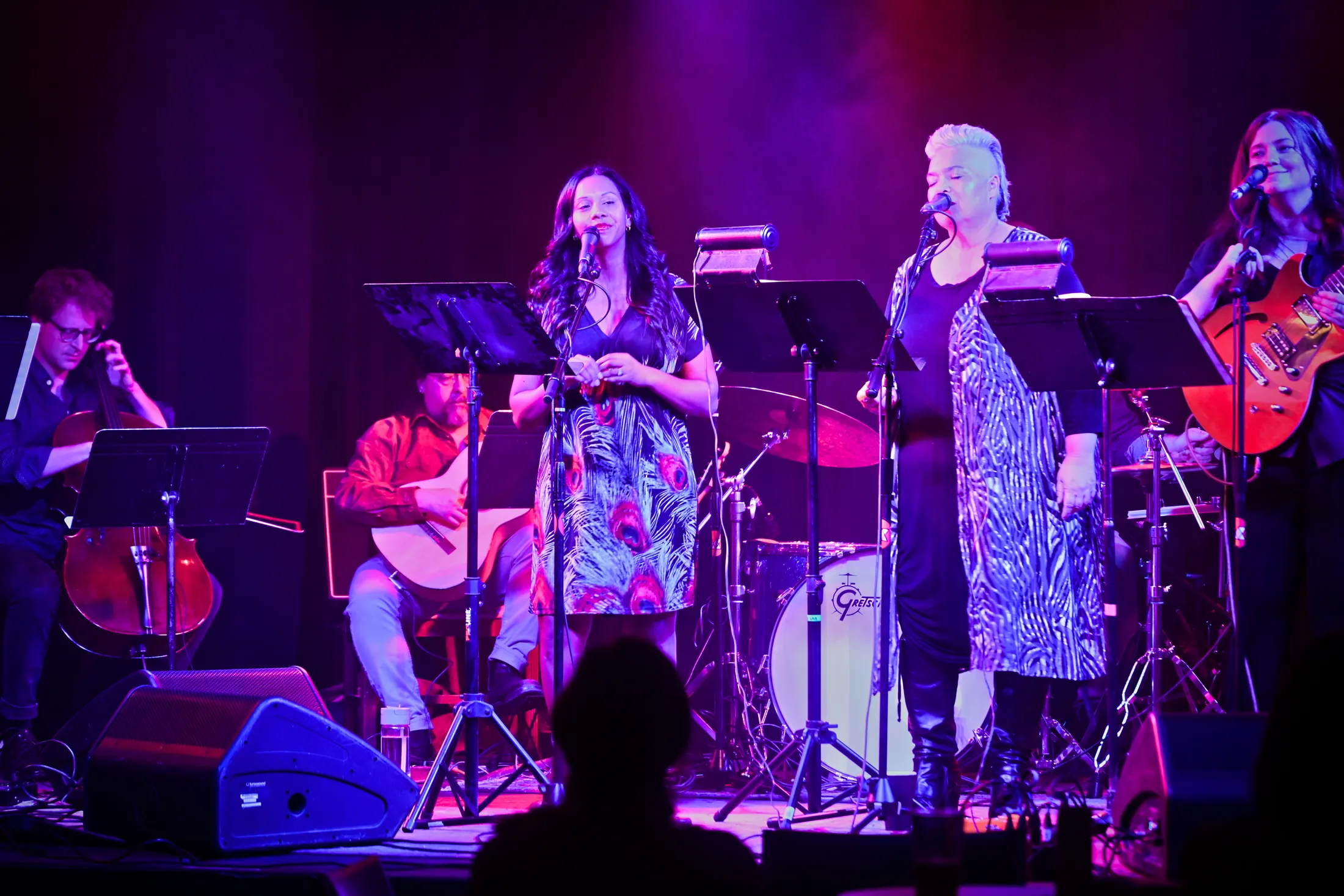
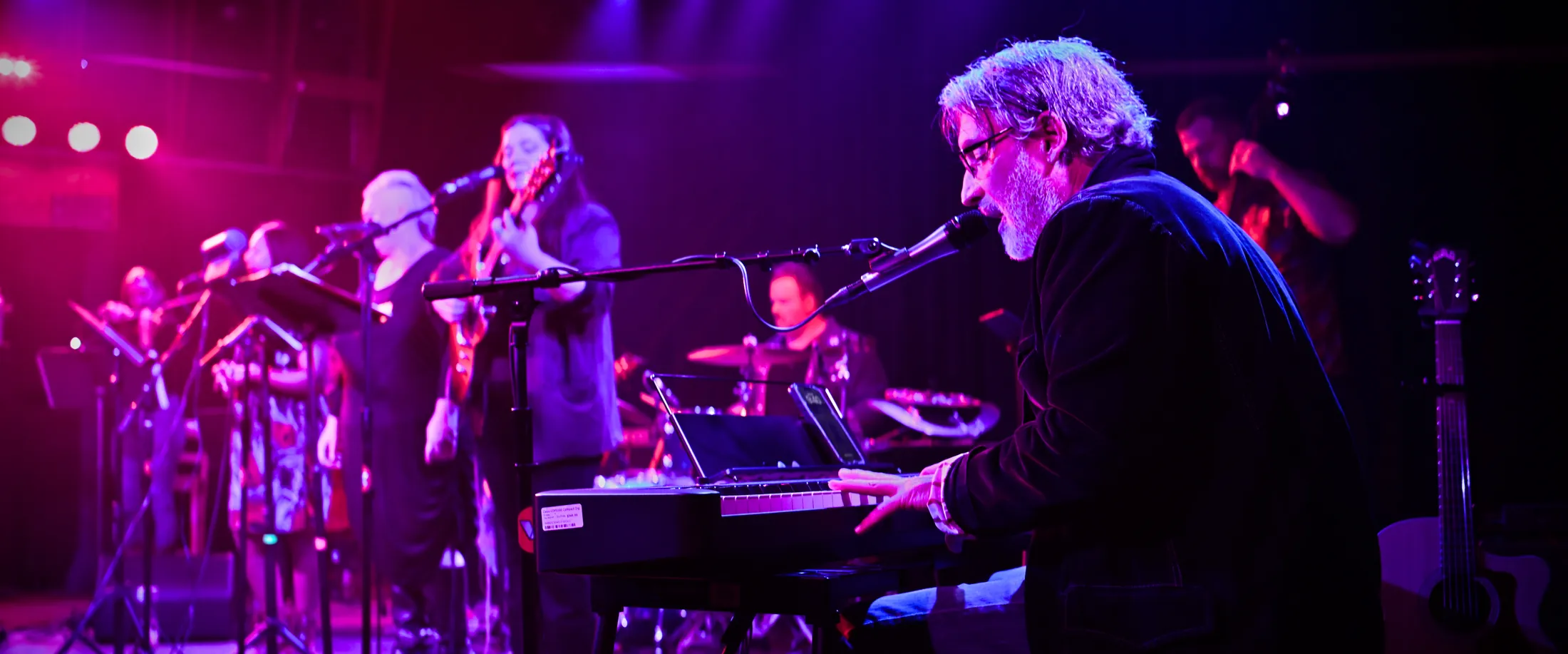
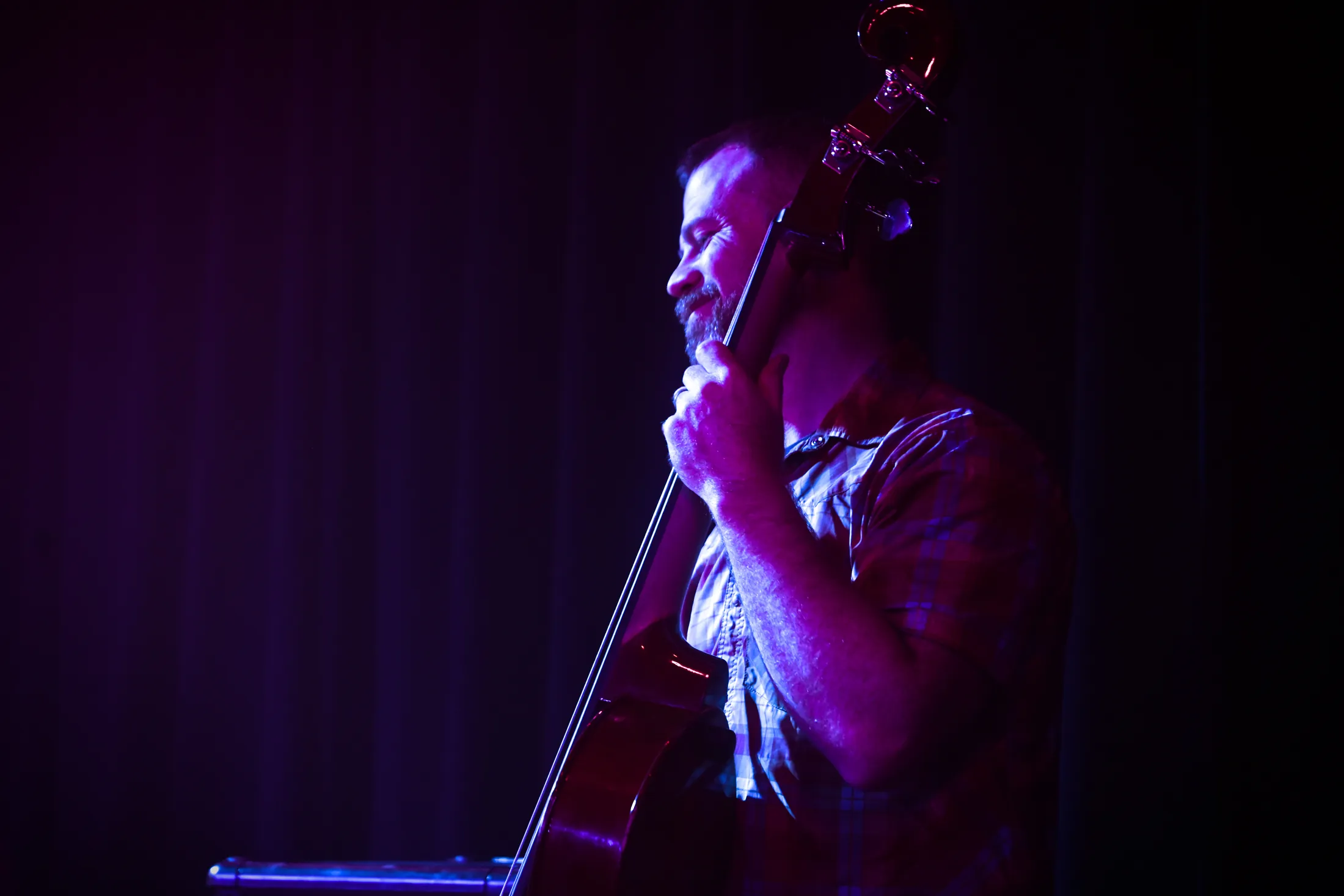
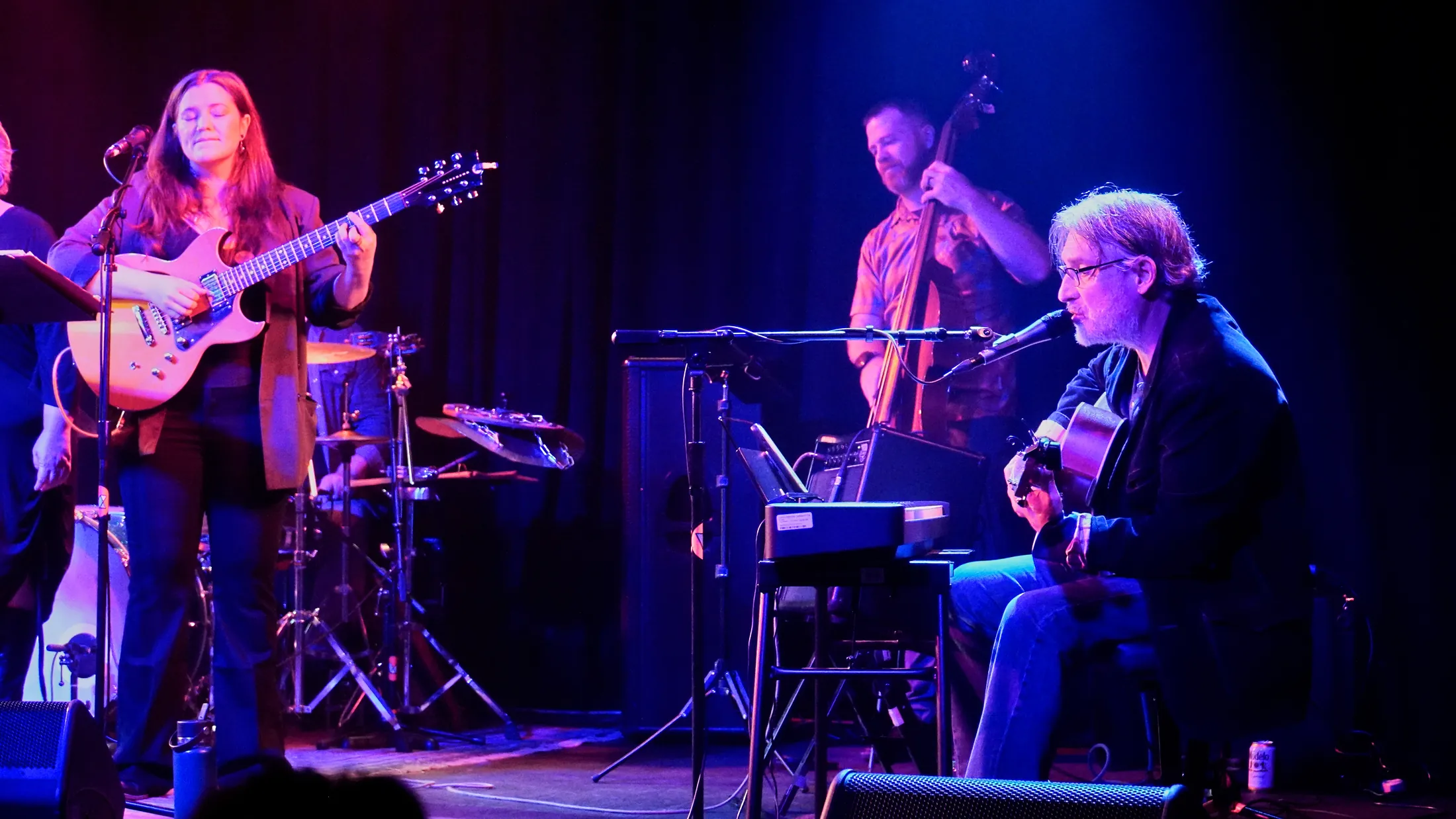
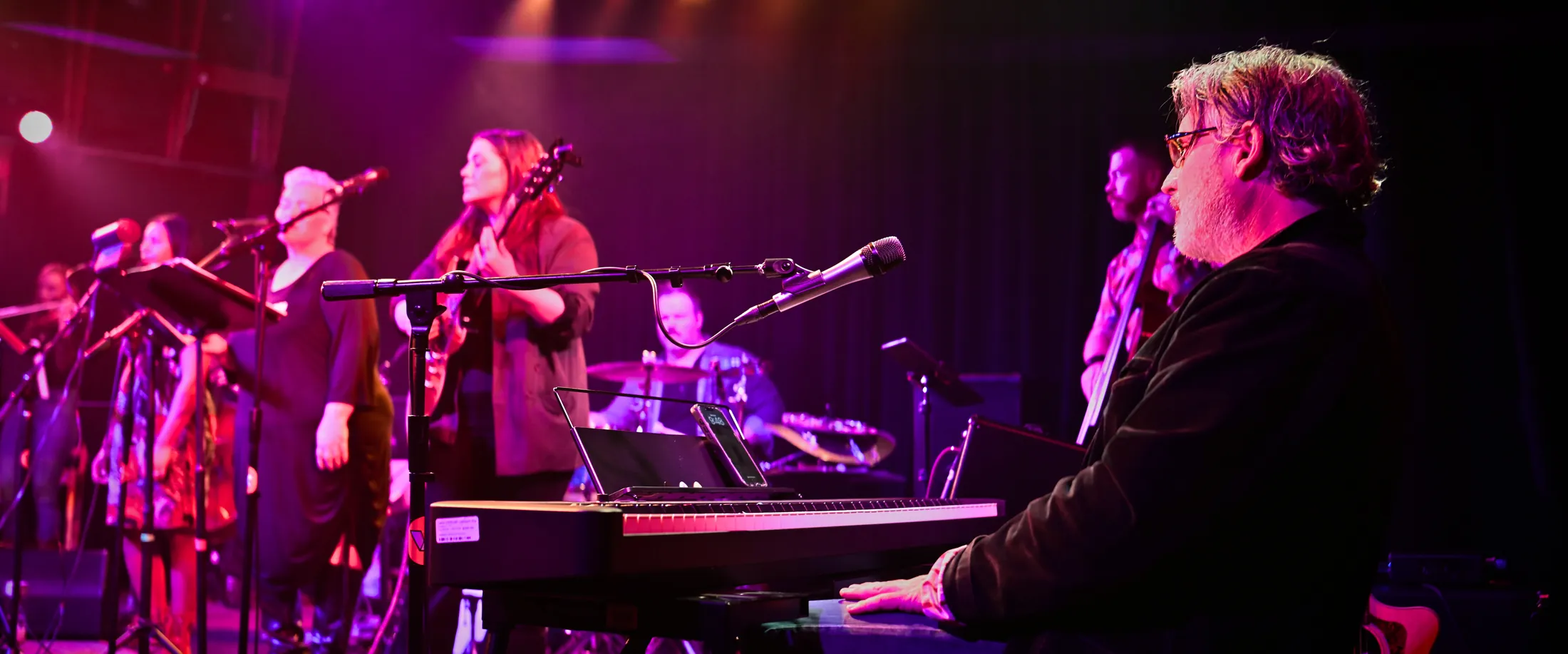
Martin Daniels and The Boise Ensemble Band performed at the Visual Arts Collective that evening, and I was commissioned to document the performance in both still photography and video. The ensemble is unusually expansive for a room of that scale, comprising Martin on keyboards and acoustic guitar, an upright bassist, a drummer, a pair of violinists, a guitarist and a line of vocalists positioned along the front of the stage. A band of that size generates a continuous surplus of photographic possibility, which appears at first to be an advantage until one recognizes that every frame committed to represents a dozen others deliberately relinquished. The work, consequently, is less a matter of capturing everything than of deciding, repeatedly and under considerable time pressure, what the evening is fundamentally about.
Concert photography within the documentary tradition
Concert photography may be defined as the documentation of a live musical performance as it unfolds, without posing, without the possibility of a second take and without any control over the illumination. In that respect it belongs far more to the documentary tradition than to commercial practice. Henri Cartier-Bresson described the object of his pursuit as the "decisive moment," the fraction of a second in which visual form and meaning momentarily coincide within the frame; on a stage, that moment might be the inhalation preceding a chorus, a bow lifting from the strings, or two vocalists converging on a single microphone. Because no performer can reasonably be asked to repeat such a gesture, the photographer must either anticipate it or forfeit it entirely.
This condition distinguishes live documentation from the commissioned band portrait, in which the photographer governs the lighting, the timing and the composition. At a concert, authorship is distributed: the musicians determine the pacing, the lighting designer determines the palette, and the photographer's responsibility is to interpret those conditions faithfully rather than to override them. The criterion I apply to the resulting images is straightforward to articulate and difficult to satisfy, namely that they ought to convey what it actually felt like to stand in that room.
Three vantage points, three photographic registers
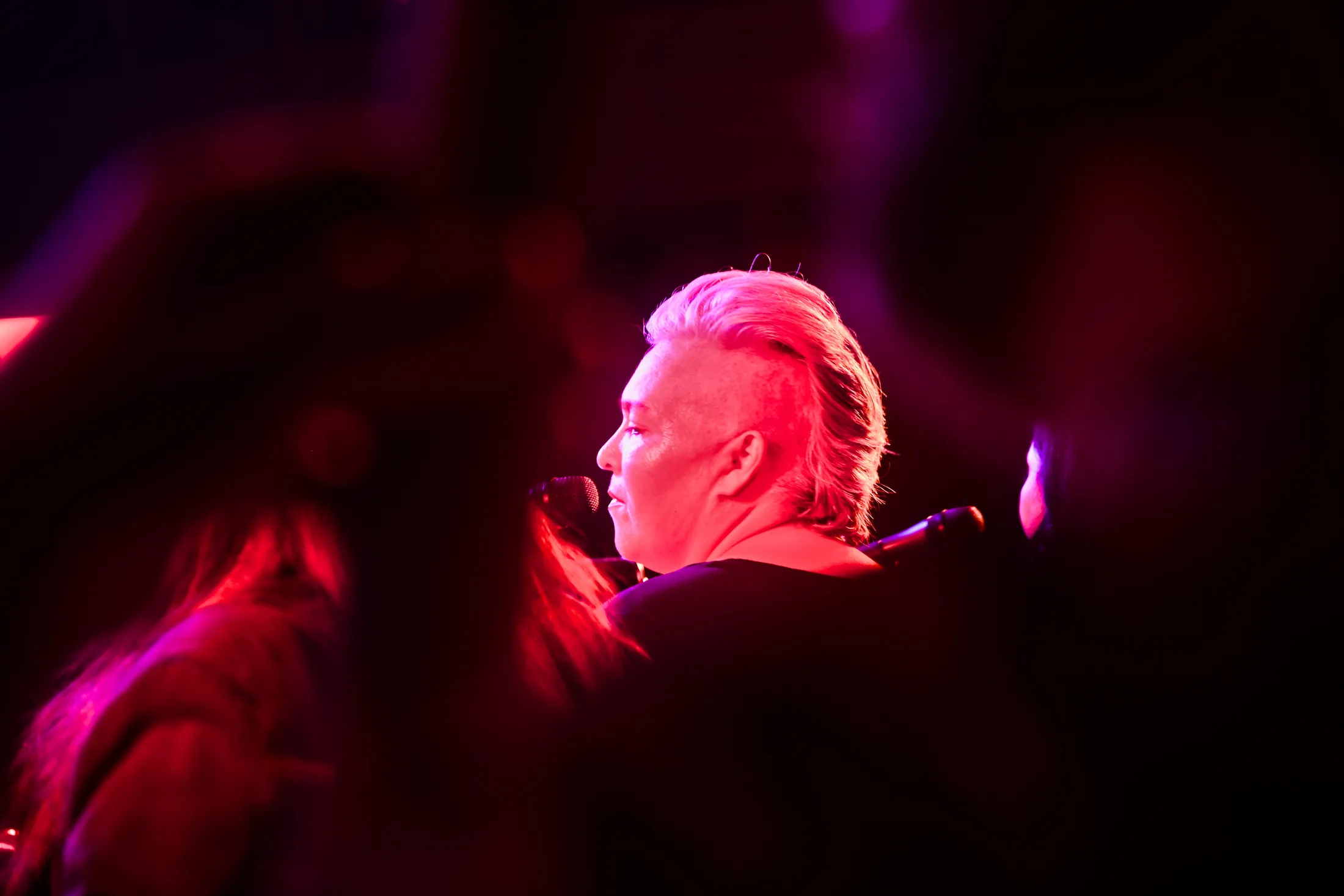
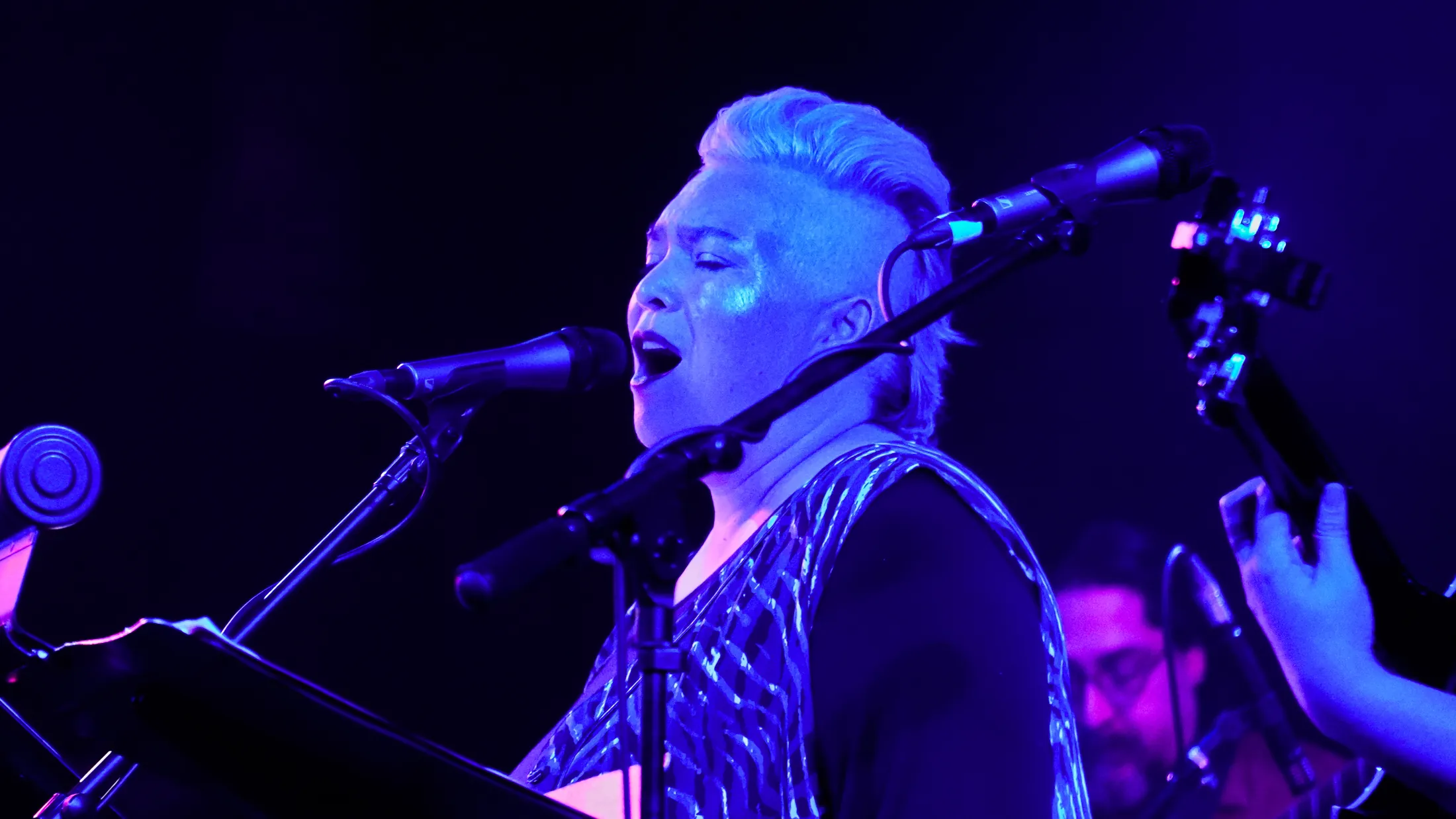
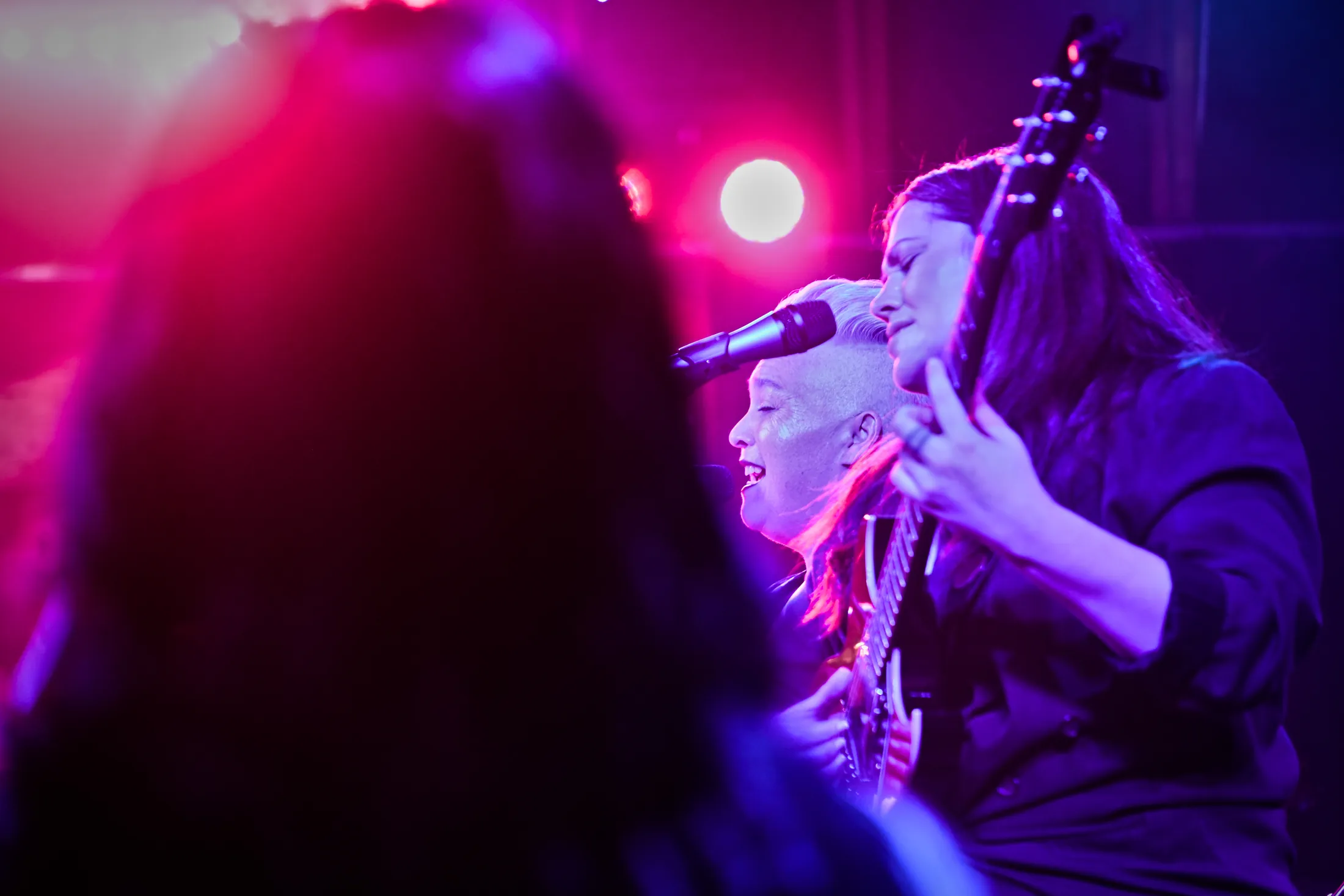
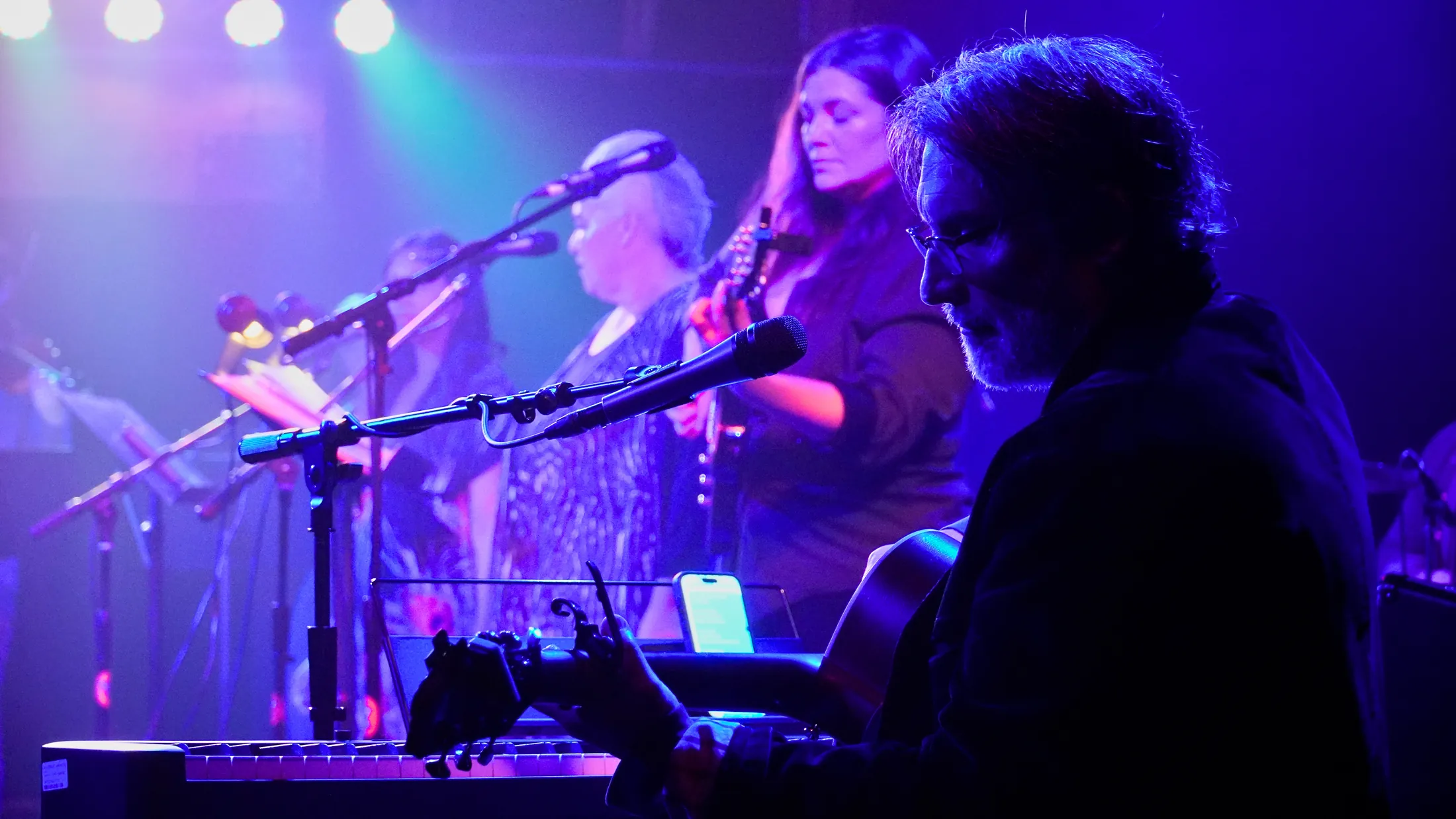
Over the course of the evening I worked from three distinct positions, each of which yielded a characteristically different kind of image. From the front of the stage, I concentrated on the vocalists and the violinists, committing to a single pair of performers at a time and waiting for them to converge on a shared microphone rather than sweeping the stage in search of something more promising. The photograph titled "Shared Mic," in which a vocalist and a guitarist lean together against a field of red backlight, is the product of that discipline; the moment lasted perhaps a second, and it was patience rather than reflex that made it possible.
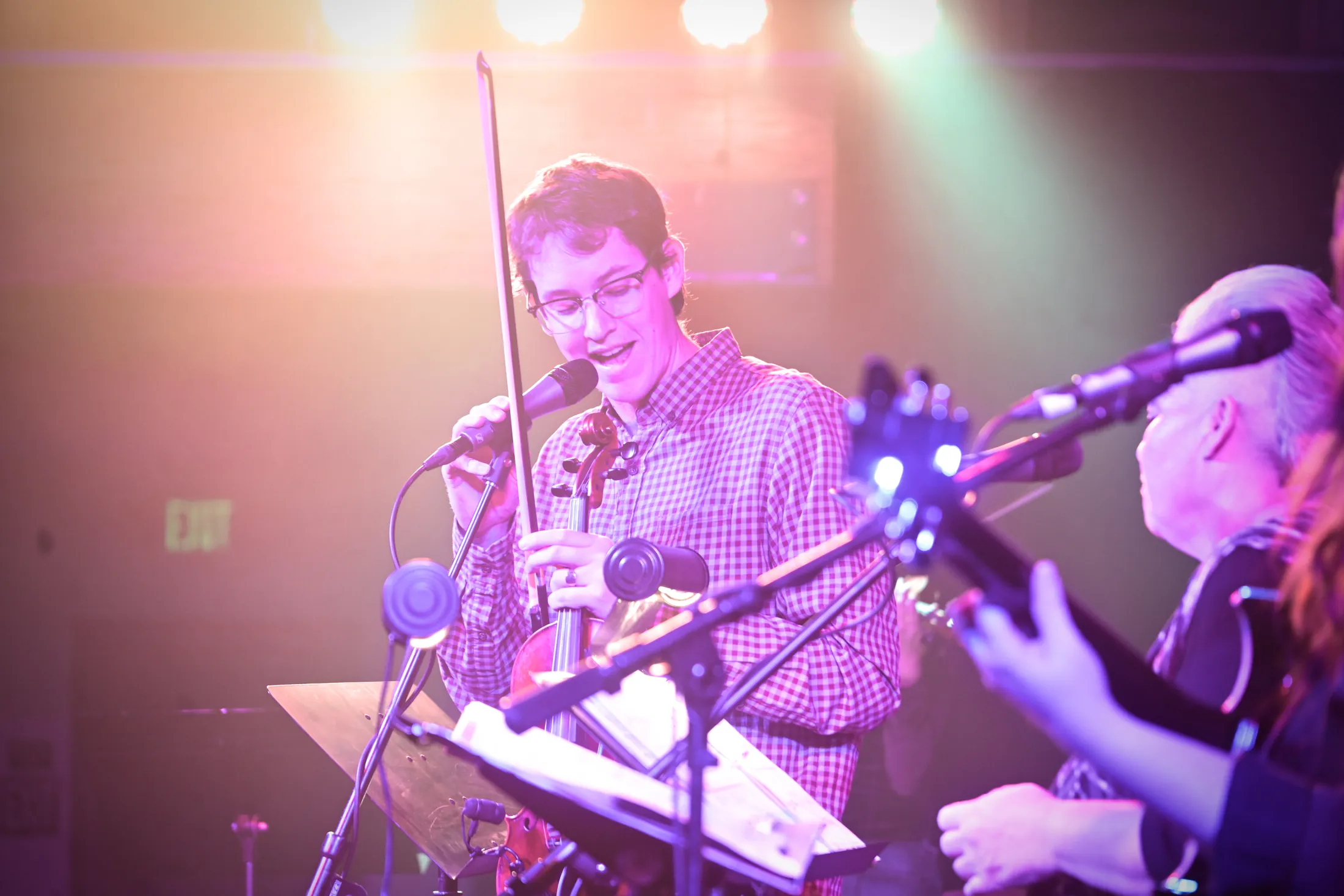
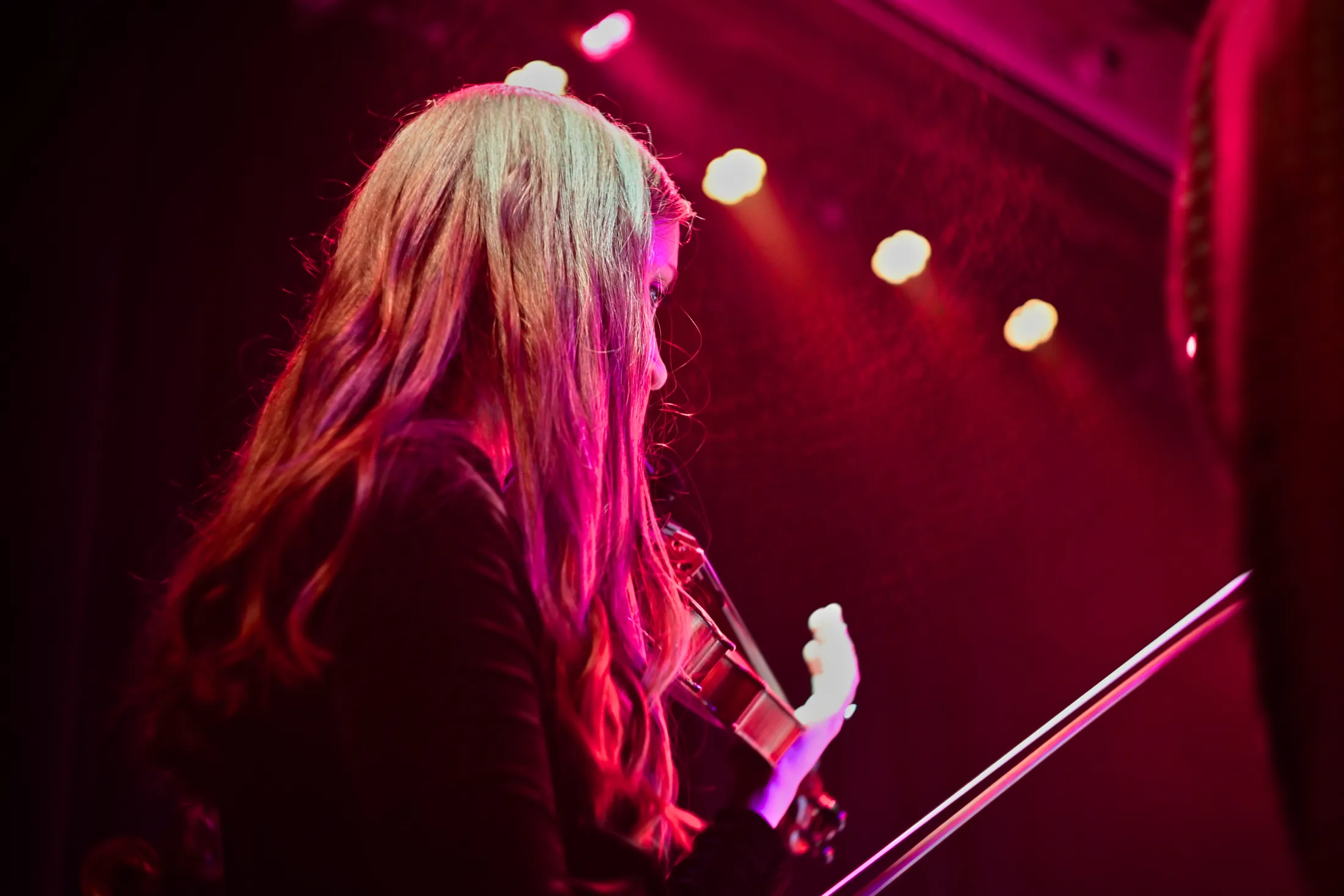
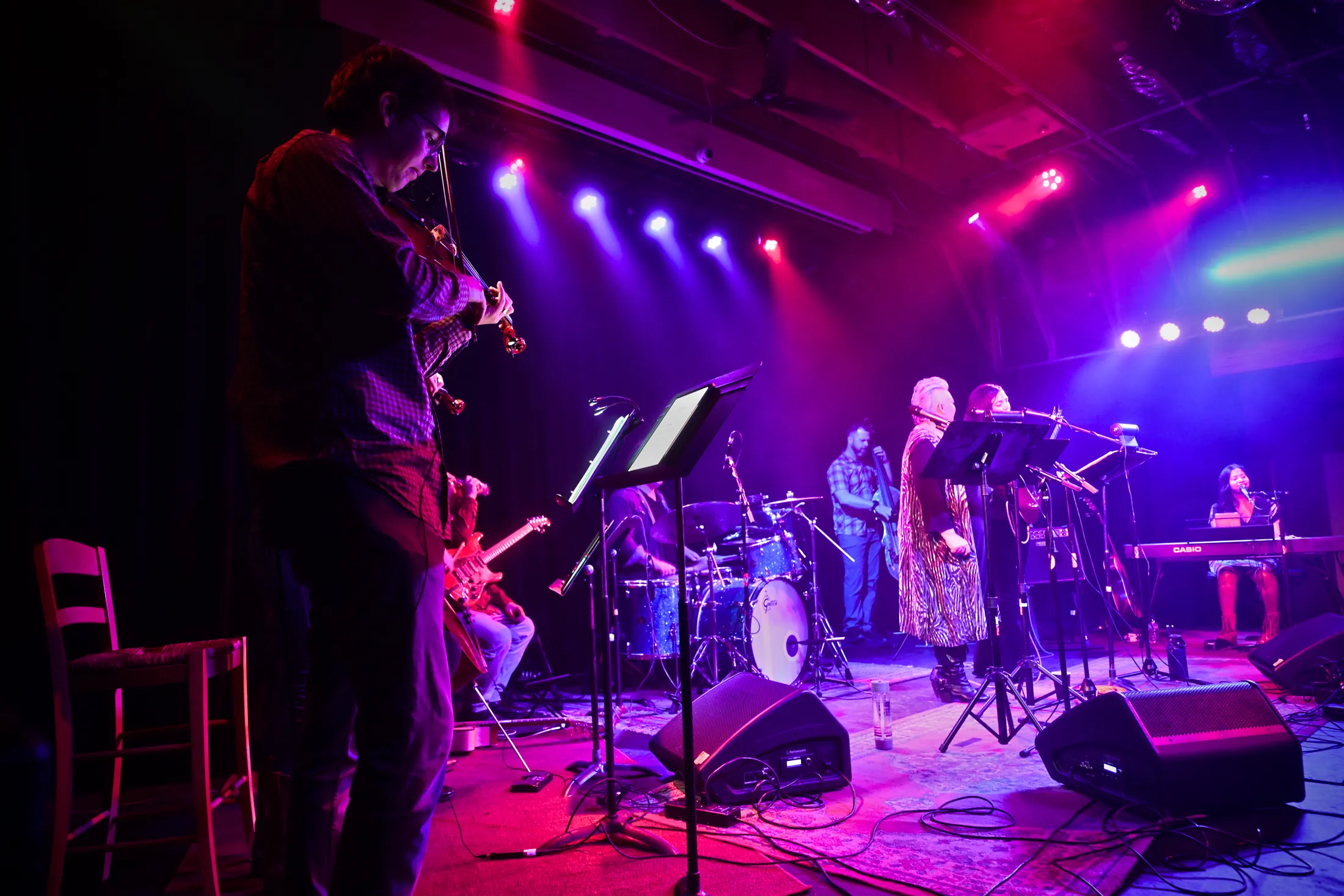
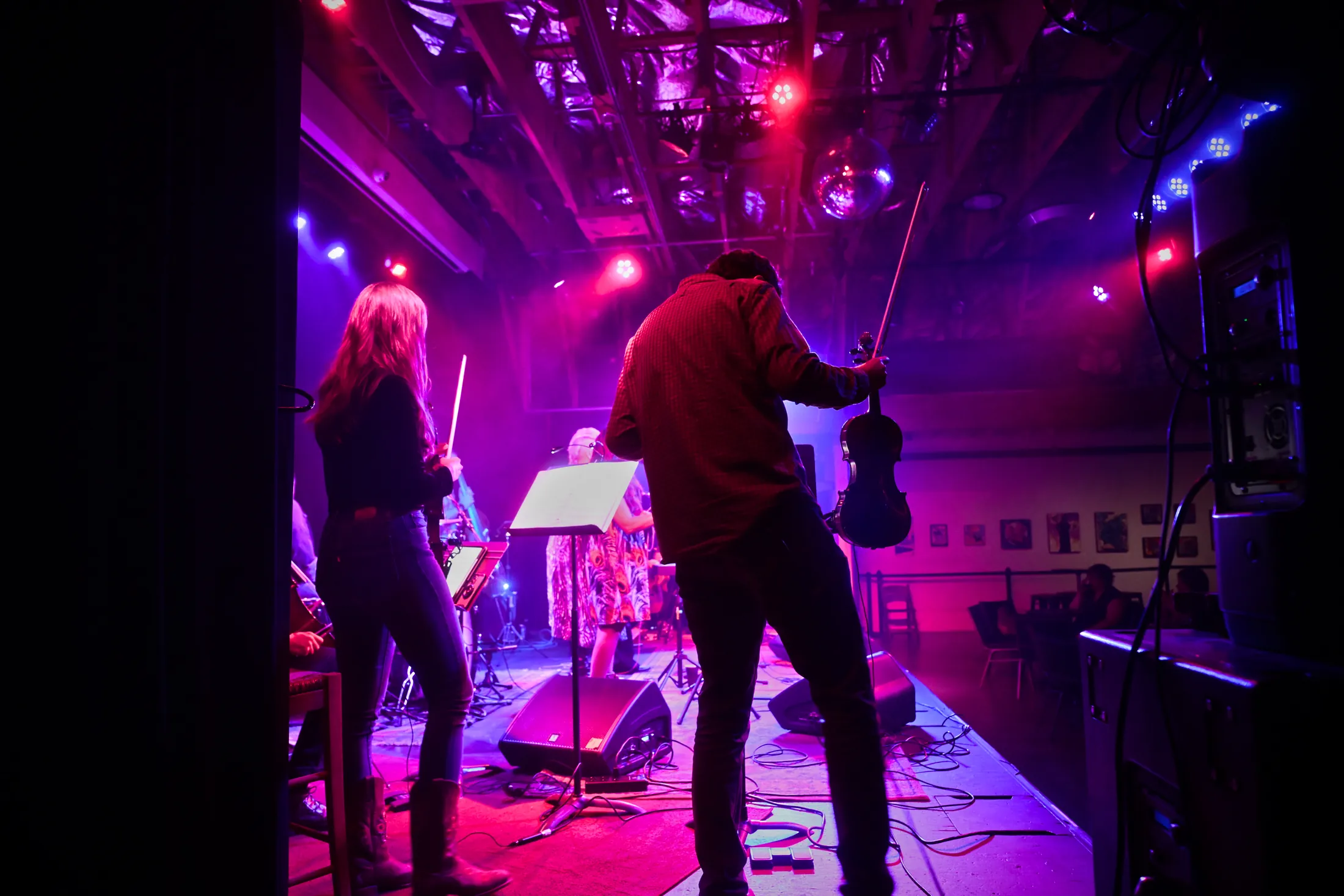
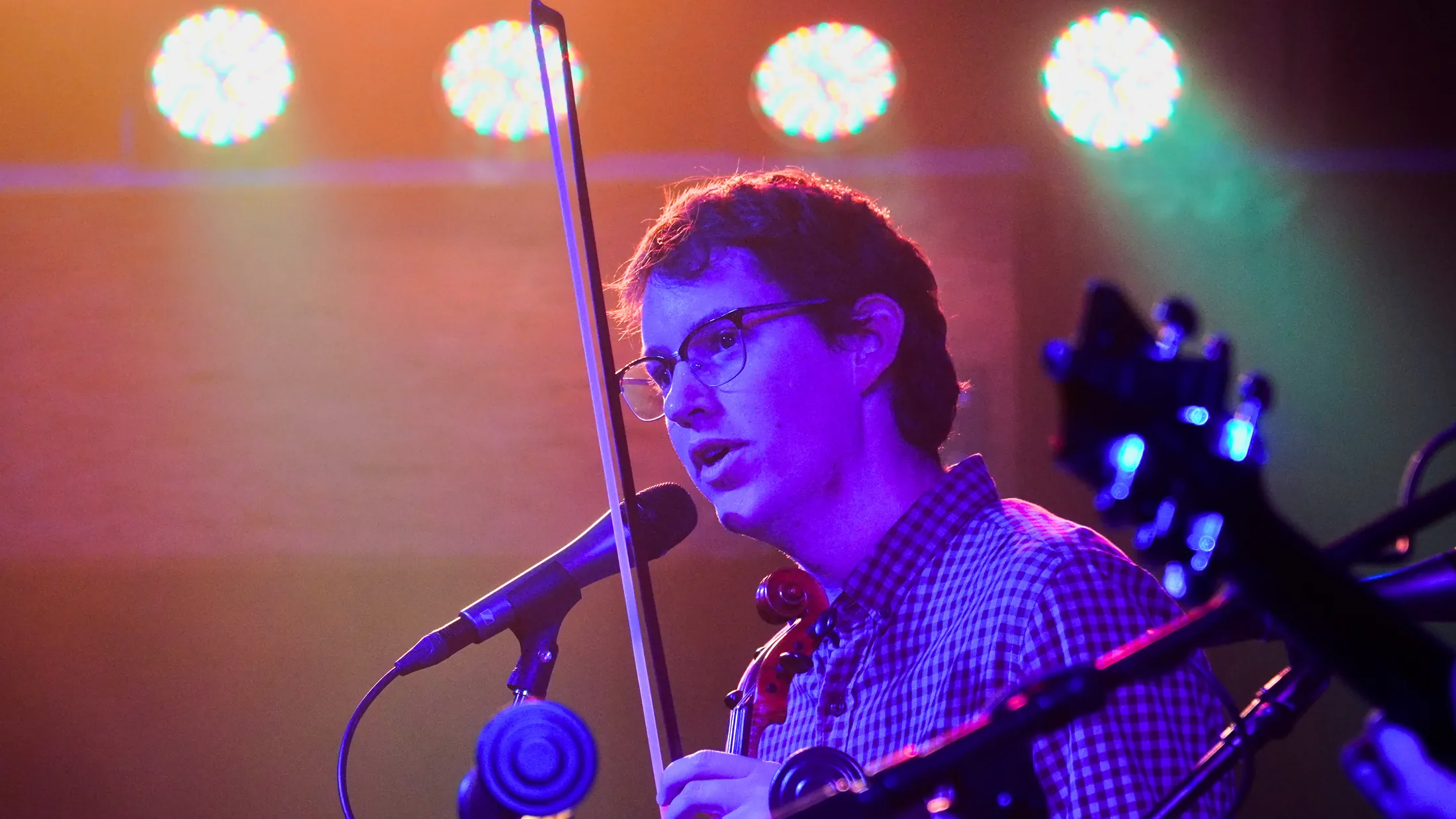
From the side of the stage, I was able to photograph past the musicians awaiting their entrances. In "Side Stage" and "Waiting In," the violinists occupy a darkened foreground while the ensemble performs in full illumination behind them, an arrangement that converts a flat procession of performers into a spatially legible environment organized in successive planes. My training in painting preceded my work in film by several years, and that inherited concern with constructing depth through layered planes remains the first compositional instinct I consult.
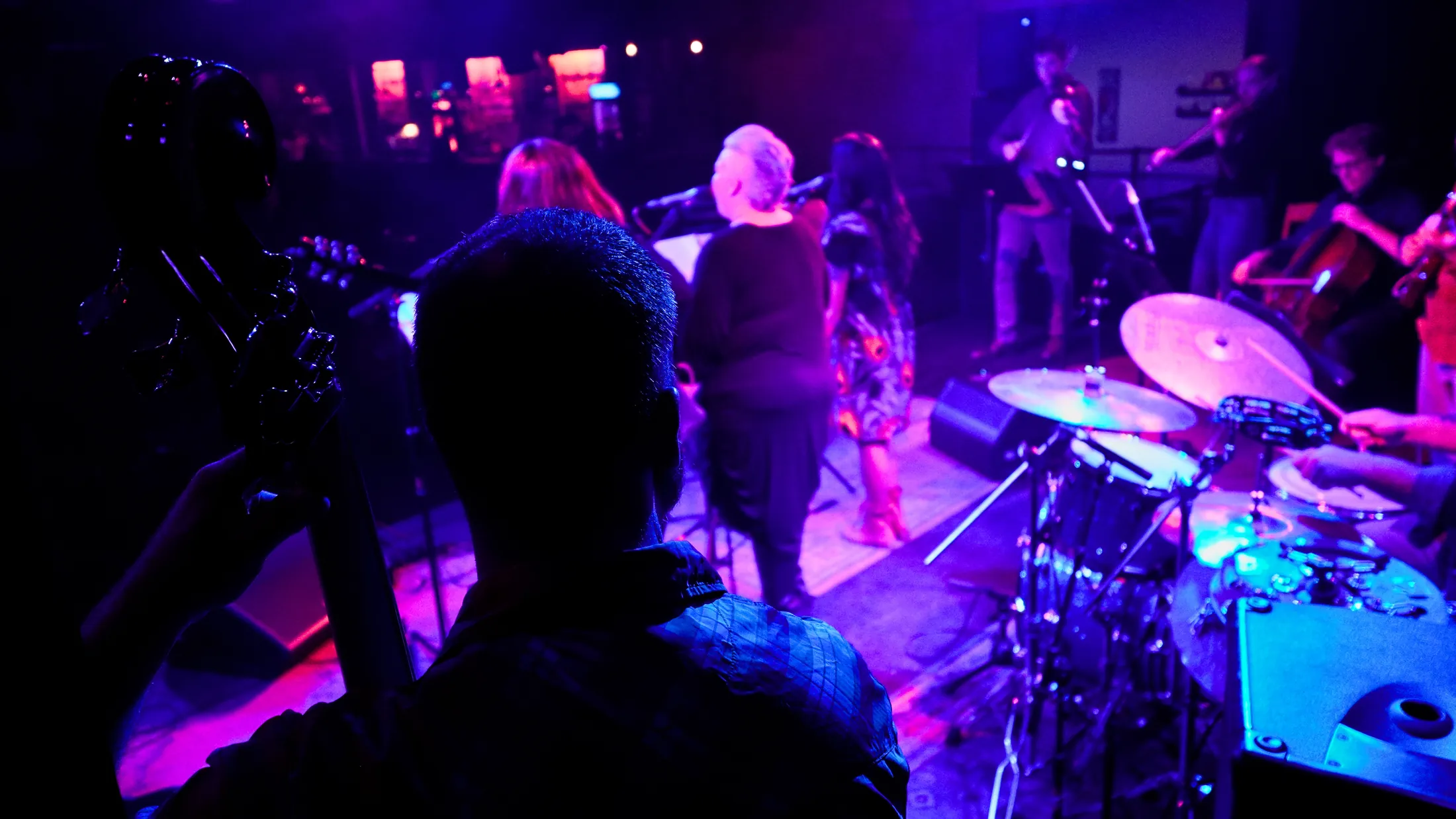
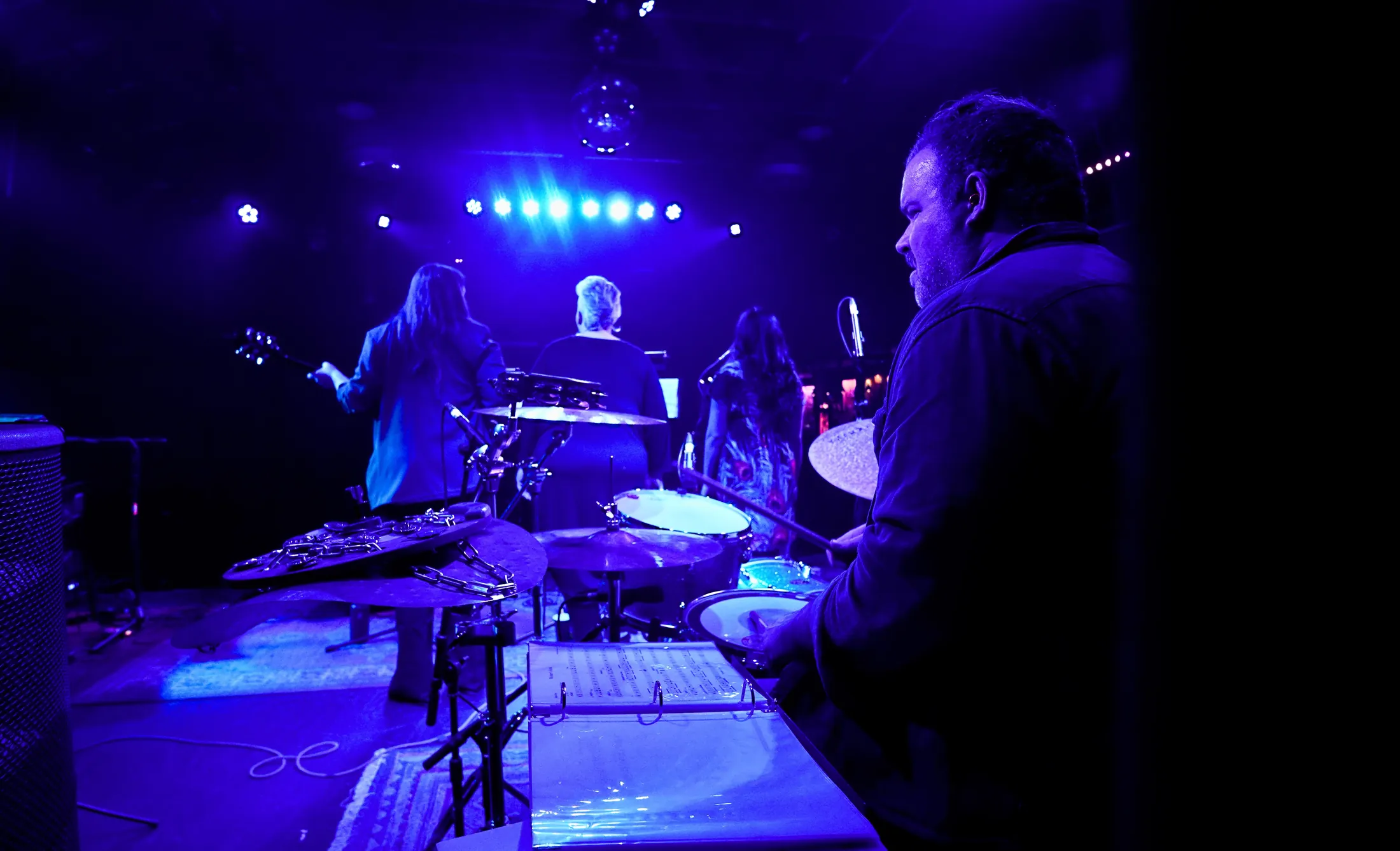
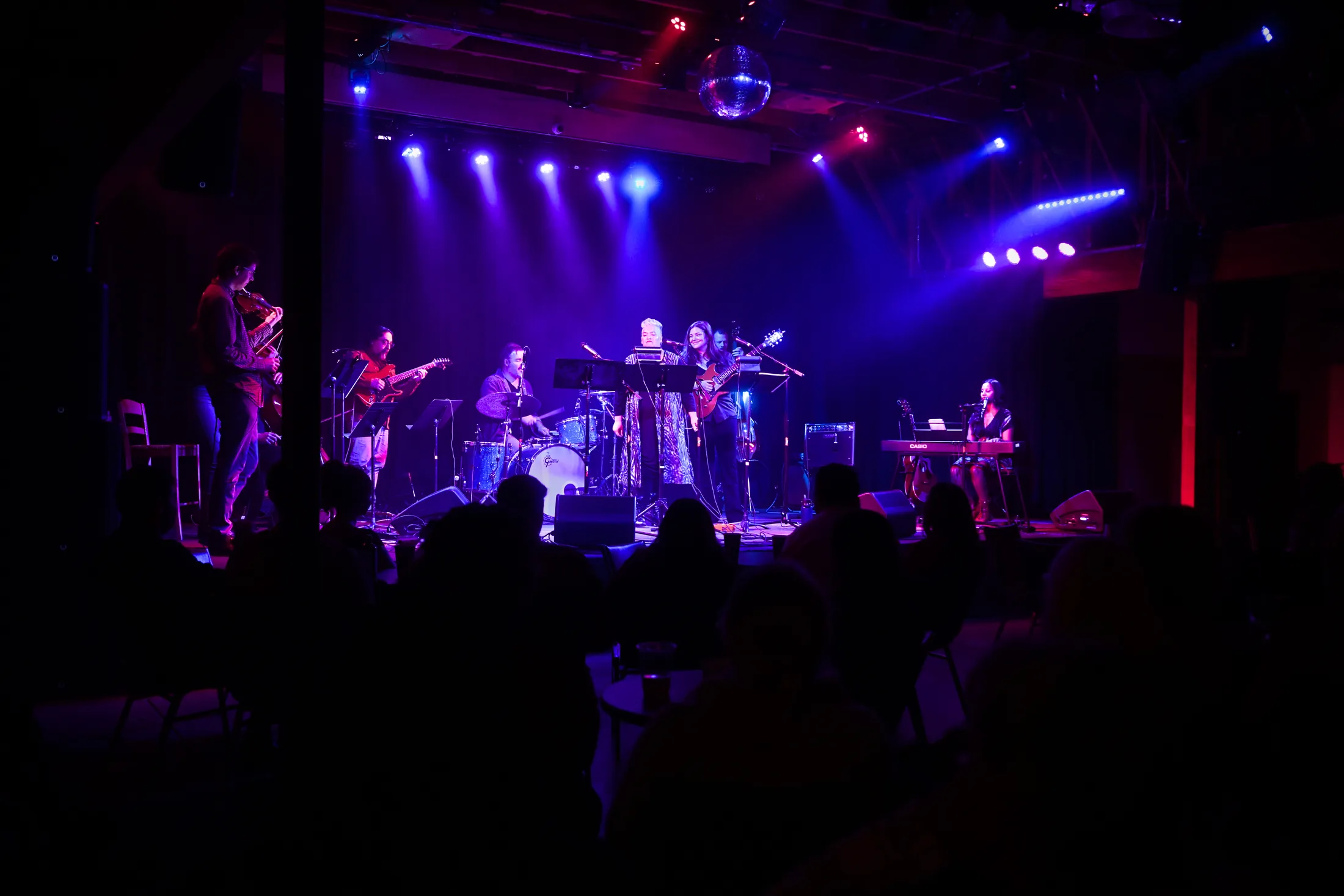
The third position, behind the drum kit, afforded a perspective unavailable to any member of the audience. "Behind the Kit" looks outward across the cymbals toward the vocalists and the lighting rig, momentarily situating the viewer within the ensemble rather than before it. I concluded the evening at the rear of the house in order to make "The Room," in which the stage is fully illuminated and the audience is reduced to silhouette. Every body of concert coverage requires at least one such establishing image, the photographic analogue of the cinematic wide shot, which locates the viewer and communicates the scale of the occasion.
The problem of stage illumination
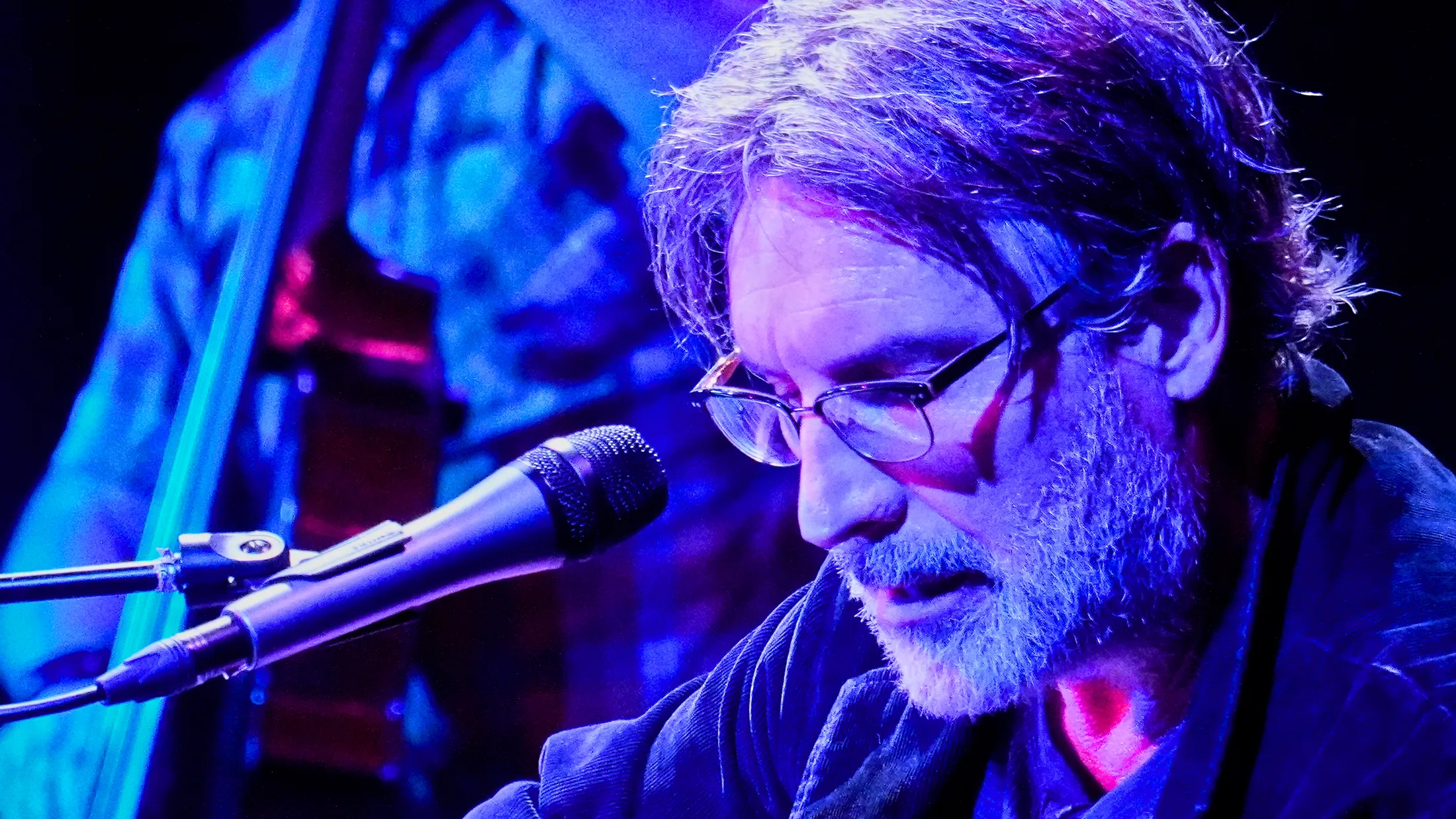
The lighting that evening was predominantly deep blue, violet and red, supplemented by a row of warm fixtures positioned behind the band. Such light is visually rich for an audience and technically demanding for a photographer, for three interrelated reasons. First, it is dim: even a well-lit stage delivers only a fraction of the intensity of daylight, so every exposure becomes a negotiation between gathering sufficient light and arresting the motion of a performer. Second, it is saturated: narrow-band colored light, and deep blue in particular, strips tonal detail from skin to the point that faces can nearly dissolve, which makes it, frankly, the light I find least congenial to work in, and the only dependable remedy is to wait for the intervals in which a warmer fixture passes across a face, as it does for the violinist in "Fiddle and Voice." Third, it is unstable: because lighting cues follow the musical structure, a scene may shift from amber to blue within a single phrase, so that reading the light becomes as consequential as reading the performers.
In post-production, I preserved the color as it existed in the room rather than correcting it toward a neutral white balance. The palette constituted the emotional register of the performance, and a concert photograph that appears to have been made under office fluorescents, however technically immaculate, has ceased to tell the truth about the evening it purports to document.
It is equally important to acknowledge what this method costs. With ten musicians on stage, something remarkable is invariably occurring outside the frame, so the decision to commit to one moment necessarily entails the abandonment of others; the resulting coverage is more honest, and ultimately more coherent, for accepting that limitation than it would be for pretending to a comprehensiveness no single photographer can achieve.
Integrated still and moving-image coverage
I recorded video during the same performance, from which the band received a series of short highlight clips intended for social media distribution. A highlight clip, in this context, is a brief edit, typically under a minute in duration, assembled from the strongest moments of a performance and synchronized to the band's actual live audio, so that it functions as a genuine fragment of the concert rather than as a sequence of images laid over a studio recording.
Undertaking both forms of coverage as a single operator offers two substantive advantages: the visual language remains consistent, because the stills and the footage share the same vantage points and the same light, and the stage carries one fewer body competing for limited space. The corresponding disadvantage is no less real, since a single operator cannot occupy two positions simultaneously, but for a large ensemble in an intimate venue it is a compromise I consider well worth making.
What a band ultimately receives from coverage of this kind is a layered archive: establishing images of the full ensemble and the room, suitable for posters, press and the venue's own use; individual portraits of each musician for their respective profiles and press materials; the moment-driven frames, such as shared microphones, harmonies and lifted bows, that audiences actually circulate; and, where video forms part of the commission, short clips cut to the live sound. Bands, venues and promoters in the Boise area who would like a performance documented are welcome to get in touch, and further live work can be found on the shows page.
Questions people ask
Where was this show?
At the Visual Arts Collective, a music and arts venue at 3638 Osage Street in Garden City, Idaho, just outside downtown Boise.
Do you photograph concerts in Boise?
Yes. I shoot photos and video of live music for bands, artists, venues and promoters around Boise, Garden City, Meridian and the Treasure Valley. Get in touch with the date and venue.
Can you shoot photos and video at the same show?
Yes. That's how this show was covered: stills plus short highlight clips cut to the band's live sound. One person covering both keeps the look consistent.
Will flash bother the band or the audience?
I don't use flash at shows. I work with the stage lights, so nobody on stage or in the crowd gets blinded and the photos keep the colors of the night.
What does a band receive after the shoot?
Edited photos from across the night, including wide shots, individual players and the key moments, plus video clips if video was booked. We agree on the details before the show.