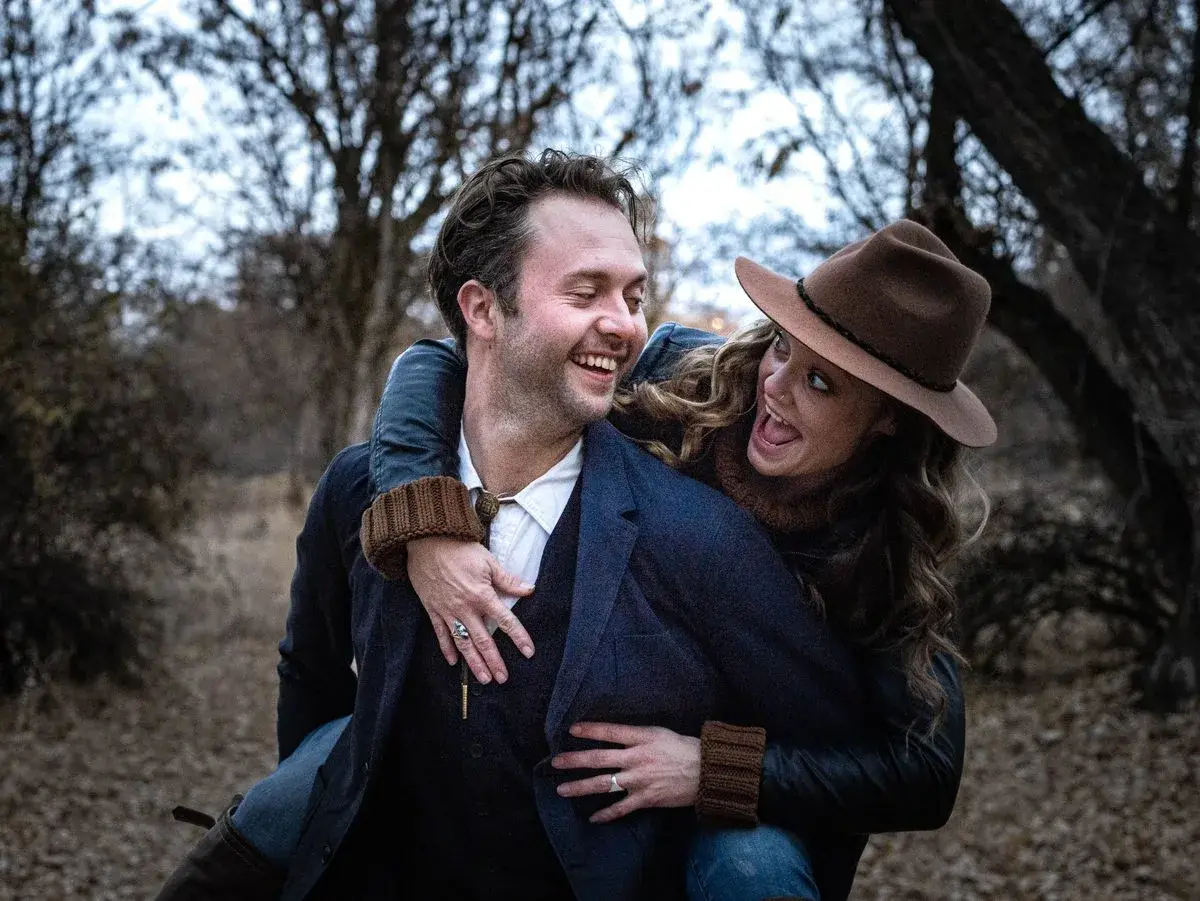
The photographs that couples ultimately keep are seldom the posed ones. They are, far more often, the frames that occur in the intervals between instructions: two people dissolving into laughter because one of them nearly dropped the other in the middle of a piggyback ride, or a glance exchanged at golden hour once both have forgotten that anyone is watching. My approach to couples photography is organized around creating the conditions for such moments and remaining prepared for their arrival.
Candid couples photography, defined
Candid couples photography may be defined as the practice of photographing two people as they genuinely are in each other's company, rather than arranging them into predetermined poses. The photographer establishes the conditions, namely the location, the quality of light and some activity for the couple to undertake, and then withdraws in order to document whatever unfolds; the direction is minimal and deliberate, while the moments themselves remain unscripted.
An engagement session is a couples session organized around an engagement. Its images frequently serve practical purposes, appearing on save-the-date cards or wedding websites, yet the session performs a subtler function as well, offering two people a comparatively low-stakes opportunity to grow comfortable before a camera prior to a wedding day on which the pressure, and the expectations, are considerably greater.
A documentary method applied to intimacy
I give couples something to do rather than something to hold, whether that means walking, talking, teasing one another or recounting a story I am not meant to overhear, and I then watch for the moment and remain out of its way, applying the same discipline I bring to live music and documentary film. The outcome is a body of images that resemble the people in them rather than the conventions of a catalog.
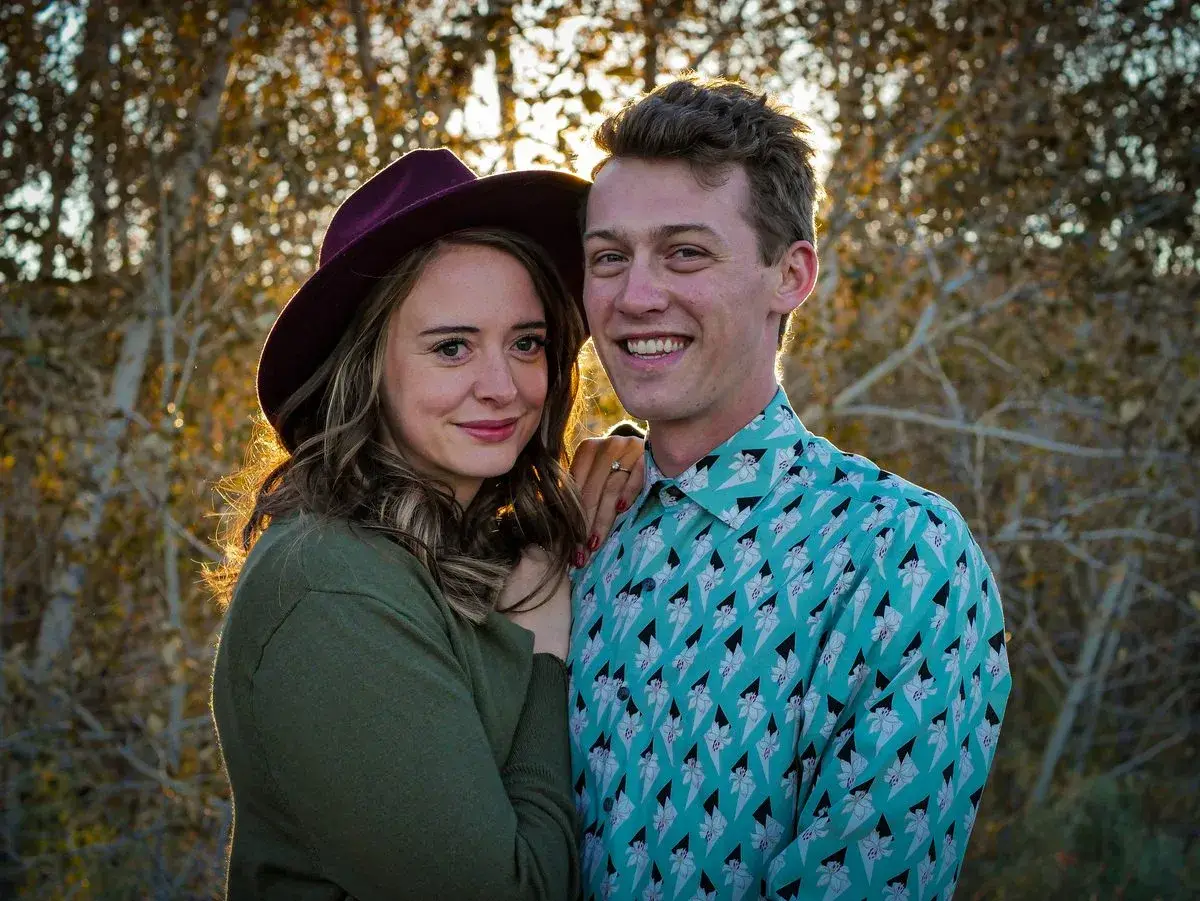
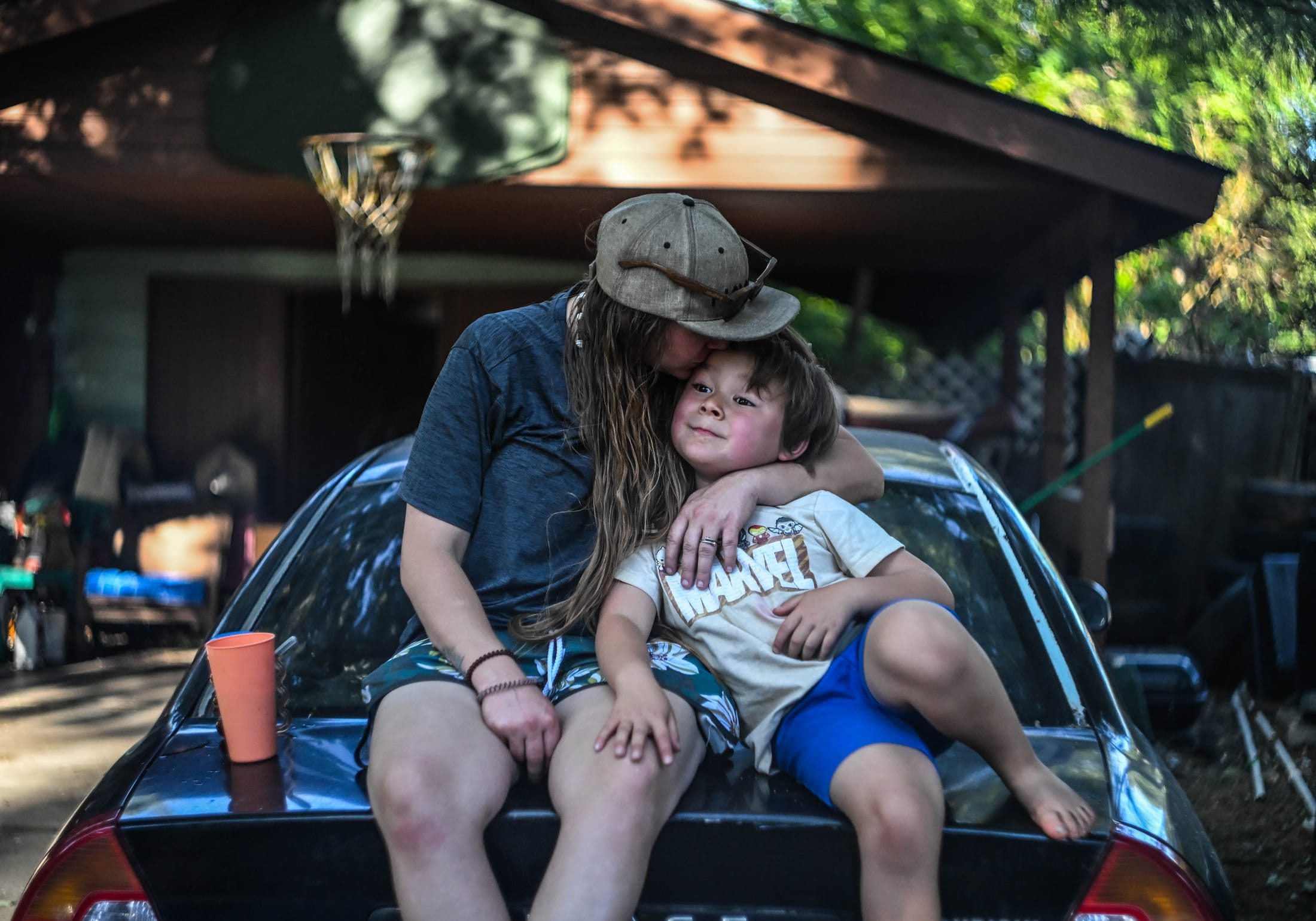
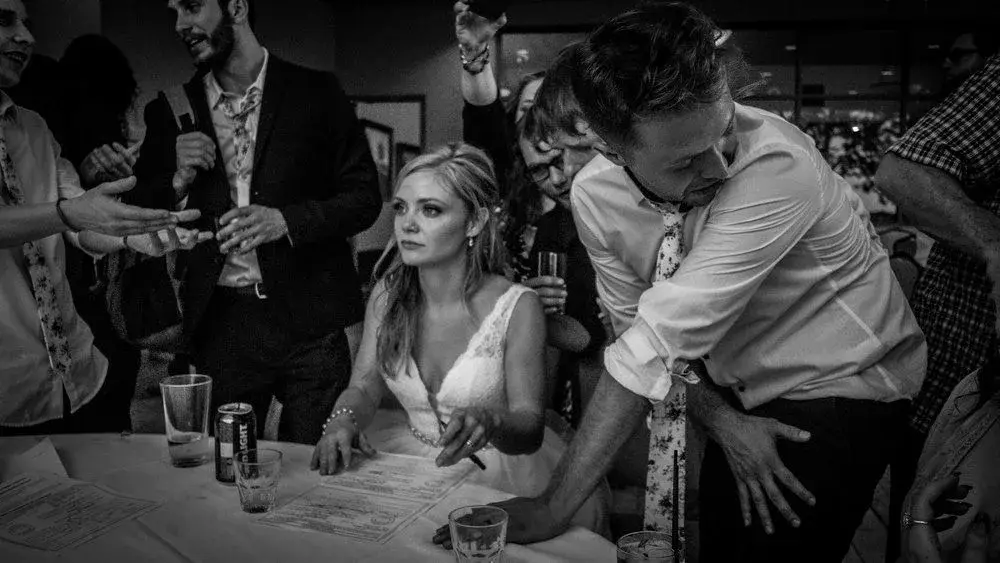
The photographs above illustrate the method. "Quinn & Gabby" records a piggyback ride that nearly ended badly and the shared laughter that followed, a reaction no amount of direction could have produced and that a photographer can only be present for. "Golden Hour Engagement" was made in the final warm light of the day, when the sun sits low enough to model faces rather than flatten them. "Wedding Night," a reception moment rendered in black and white, demonstrates how the removal of color eliminates décor and competing detail, leaving gesture and feeling as the image's only subjects, and "Akihiro & Rhianna" serves as a reminder that a couples portrait requires no scenic overlook, only two people and well-considered light.
The method entails a trade-off that deserves to be stated explicitly: couples who want every frame precisely posed, with every hair in place, will likely find my style ill-suited to them, because I would rather preserve a genuine laugh with a strand of hair across someone's face than a flawless smile that signifies nothing.
The physics of golden hour
Golden hour refers to the periods shortly after sunrise and shortly before sunset, when the sun is positioned low on the horizon. At such angles, sunlight traverses a considerably longer path through the atmosphere before reaching the observer, and the shorter blue wavelengths are scattered away along that path, a phenomenon known as Rayleigh scattering. The light that remains is warmer, softer and more directional; shadows lengthen, contrast diminishes, and skin acquires a warmth that no reflector can entirely replicate.
In Boise, the timing of the evening golden hour varies substantially across the year, falling in the late evening during midsummer and in the late afternoon during winter. The most reliable method of planning is to consult NOAA's solar calculator for the sunset time on a given date and to begin approximately an hour beforehand. Couples who prefer a moodier result can continue past sunset into blue hour and full darkness, working with streetlights, string lights or headlights, an approach that extends the reasoning behind my cinematic night portraits.
Locations in and around Boise
Having grown up in Boise and spent a good many summer nights walking the city until sunrise, I tend to think of it in terms of its light. Location ultimately matters less than light and chemistry, but the city nonetheless offers a range of compelling settings. The Boise Foothills provide open terrain, an unobstructed western sky and sunsets over the valley, and the trail system is administered by Ridge to Rivers, which publishes current trail conditions that merit consulting after rain or snow. The Boise River Greenbelt offers mature trees, moving water and filtered light along a corridor that runs directly through the city, while municipal parks such as Kathryn Albertson Park and Julia Davis Park provide paths, ponds and open shade. Downtown Boise, after dark, supplies brick, neon and the city's own ambient illumination. The most rewarding location, however, is frequently one that belongs to the couple, whether a neighborhood, a kitchen or the bar where they first met, because personal significance photographs better than generic beauty with remarkable consistency. Some parks and venues maintain their own regulations governing photo sessions, so it is prudent to inquire in advance for any location that is heavily trafficked or privately managed.
Preparing for a session
Couples generally photograph best in clothing in which they feel most like themselves, and solid colors and simple textures tend to render more gracefully than dense patterns or prominent logos; coordinating, rather than matching, usually yields the most natural result. A second outfit provides useful range, perhaps one casual and one more formal, and an object that belongs to the couple's story, such as a dog, a blanket, a guitar or a habitual drink, often anchors the most personal images. Sessions are best scheduled around the light rather than the clock, given how substantially golden hour shifts across the year, and above all, couples should bring the dynamic they already share, which matters considerably more than any location. Further work appears on the couples page, and anyone wishing to plan an engagement or couples session in Boise or the wider Treasure Valley is welcome to get in touch.
Questions people ask
What is golden hour?
The time shortly after sunrise and before sunset when the sun is low, so the light is warm and soft and shadows are long. Check your date's sunset time with NOAA's solar calculator and start about an hour before.
What is an engagement session?
A couples photo shoot around an engagement, often used for save-the-dates or a wedding website, and a good way to get comfortable in front of the camera before the wedding.
Where are good places for couples photos in Boise?
The Boise Foothills, the Boise River Greenbelt, city parks like Kathryn Albertson and Julia Davis, downtown Boise after dark, or a place that means something to the two of you.
What should we wear for engagement photos?
Clothes you feel good in, in solid colors or simple textures. Coordinate rather than match, and bring a second outfit if you want variety.
Do you photograph couples outside Boise?
Yes. Meridian, Eagle, Nampa, Garden City, the rest of the Treasure Valley and across Idaho. Get in touch with your idea.